There are instruments that need no introduction. You only have to hear the first few notes, and images of mountain peaks, morning mist, rustling forests, or endless steppes appear before your eyes. The pan flute is exactly such an instrument. Its soft, warm, yet deeply expressive sound has fascinated people in different parts of the world for thousands of years. It can effortlessly transport the listener from a concert hall into the heart of the wilderness, while its timbre sounds equally natural in folk, classical, contemporary ethnic, and even cinematic music.
Today, the pan flute is experiencing a new wave of popularity. It is chosen by beginners, professional musicians, world music performers, meditation enthusiasts, and everyone looking for an instrument with a truly living character. To understand why it has still not lost its magic, it is worth returning to the very origins of its history.
The Legend of Syrinx: How the First Pan Flute Was Born
The history of the pan flute is inseparably linked with one of the most famous myths of Ancient Greece. The legend tells of Pan, the god of forests, shepherds, and wild nature, who fell in love with the beautiful nymph Syrinx. Trying to escape his pursuit, she asked the gods for help and was transformed into reeds.
When Pan embraced the reeds, the wind passed through their stems and created an unusual, sorrowful sound. Struck by this melody, Pan cut several reeds of different lengths, joined them together, and created the first multi-pipe wind instrument, which became known as the syrinx. It is from the name of the god Pan that the modern pan flute received its world-famous name.
More than two thousand years have passed, yet the principle behind the instrument has hardly changed. Just as in ancient times, the musician brings each individual pipe to life with air, creating an exceptionally natural and emotional sound.
The Pan Flute in Different Cultures of the World: From the East to the Andes
Although the Greek legend is the best known, similar instruments appeared independently in many different civilizations.
In China, the paixiao, a multi-pipe flute, was used as early as ancient times during imperial ceremonies and in court music. In Romania and Moldova, a tradition of playing the nai developed. Today, this instrument is regarded as one of the symbols of European ethnic music.
The pan flute holds a special place in the culture of the Andes, where it is known as the siku or zampoña. It accompanies folk celebrations, festivals, and traditional ceremonies in Bolivia, Peru, Ecuador, and Chile, creating the distinctive sound of South American folklore.
Ukrainian musical tradition also has close relatives of the pan flute, including the kuvytshi and svyrili, which were used in folk music-making many centuries ago.
Despite the enormous geographical distances between them, all these instruments share one important feature: historically, the finest timbre was produced by natural reed or bamboo. These organic materials create a warm, full-bodied sound with soft harmonics that is difficult to reproduce with modern synthetic alternatives.
The Pan Flute on the Modern Ethnic Music Scene
Today, the pan flute has long moved beyond the boundaries of folk music. It can be heard in symphony orchestras, film soundtracks, ambient music, new age, world music, and even rock compositions.
Millions of listeners around the world recognize its sound from the legendary composition “The Lonely Shepherd,” written by James Last and made famous by the Romanian virtuoso Gheorghe Zamfir. This melody became a symbol of the pan flute’s magical sound for several generations of listeners.
In recent years, the popularity of ethnic music has continued to grow. More and more people are turning to natural timbres during yoga, meditation, sound therapy, or simply for making music at home. The pan flute blends beautifully with acoustic guitar, piano, percussion, and electronic arrangements, opening up broad creative possibilities for musicians.
Alfabeto Bamboo Pan Flutes: Historic Sound in a Modern Form
Traditions remain alive when modern craftsmen continue them. The Alfabeto Bamboo series is a perfect example, created for musicians who value authentic sound and high-quality workmanship.
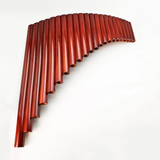
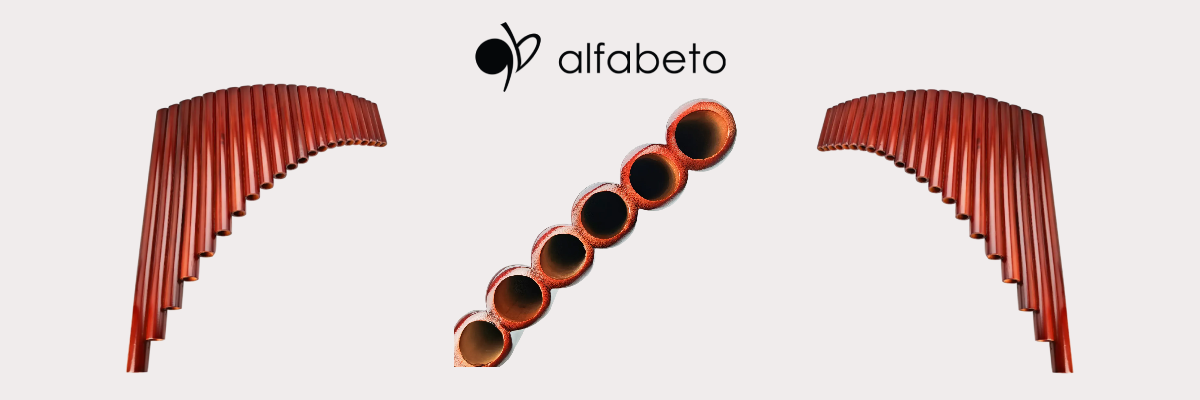
Alfabeto PF22CR Bamboo Pan Flute, Right-Handed
Priced at UAH 9,900, the Alfabeto PF22CR Bamboo is an excellent choice for most musicians thanks to its classic right-handed design.
The instrument is made from selected natural bamboo, which produces the same historic warm, soft, yet rich timbre for which the pan flute has been valued for centuries. Bamboo is lightweight yet durable, ensuring a long service life and comfortable playing even during extended performances.
Its construction consists of 22 carefully finished pipes that provide clear intonation, stable sound, and comfortable performance. The pan flute is tuned to C major, a universal key that is ideal both for a beginner’s first introduction to the instrument and for performing complex musical works.
The natural brown shade of the bamboo highlights the material’s organic texture, while the delicate glossy finish beautifully reflects the light without hiding the natural beauty of the wood. Neat, professional markings on the pipes make orientation easier during practice and performance.
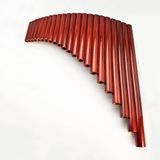
Alfabeto PF22CL Bamboo Pan Flute, Left-Handed
For left-handed musicians, the company offers the Alfabeto PF22CL Bamboo at a price of UAH 9,900.
In terms of acoustic characteristics, it fully matches the classic model and stands out for the high-quality finishing of every element.
The only difference lies in the orientation of the pipes. This allows musicians to choose an instrument that best suits their anatomy and familiar playing technique without sacrificing comfort or performance quality. This approach makes it possible to focus entirely on the music instead of adapting to an inconvenient construction.
How to Care for a Bamboo Pan Flute
Natural bamboo is known for its strength and durability. However, like any organic material, it requires simple but careful maintenance.
After playing, it is enough to wipe the instrument with a dry, soft cloth to remove any remaining moisture. It is not recommended to leave the pan flute in direct sunlight or near sources of intense heat. Sudden temperature changes and high humidity should also be avoided. Under these simple conditions, the instrument will preserve its appearance and stable sound for many years.
A Pan Flute That Combines Millennia of History with Modern Craftsmanship
From the ancient Greek legend of Pan and Syrinx to modern concert stages, the pan flute has travelled through thousands of years without losing its ability to evoke powerful emotions. Its natural sound remains relevant in every era, while natural bamboo is still considered one of the finest materials for making this instrument.
If you have long dreamed of discovering the unique world of ethnic music or are looking for an instrument that will become a source of inspiration for many years, consider the Alfabeto PF22CR Bamboo and Alfabeto PF22CL Bamboo. Both models combine a classic construction, professional workmanship, 22 precisely tuned bamboo pipes, and the versatile key of C major. The choice between right-handed and left-handed versions allows every musician to find an instrument that becomes an extension of their own breath and the beginning of a new musical story.